
Hidden Causes of Weight Gain Boost Metabolism Naturally

It is one of the most frustrating puzzles of modern life: statistically, we consume fewer total calories than our ancestors did a hundred years ago, yet we are steadily getting heavier. Why is a society that is increasingly obsessed with dieting experiencing unprecedented rates of weight gain?
While changes in food processing and diet composition certainly play a part, the primary culprit hidden in plain sight is our sedentary lifestyle.
For previous generations, physical movement wasn’t an item on a to-do list or an expensive luxury—it was woven into the very fabric of daily survival. Our parents and grandparents thought nothing of walking several miles to work. Every household chore was a physically demanding workout. Consider the traditional weekly wash: it was done entirely by hand, requiring hours of intense scrubbing, lifting, and wringing.
In stark contrast, modern convenience has systematically engineered movement out of our lives. We drive cars to nearby shops, toss clothes into automated washing machines, and rely on an endless array of smart gadgets designed to minimize human effort. While no one wants to return to the days of exhausting, demoralising domestic grind, we must face the negative result of this progress: our bodies are starved of the everyday motion they truly need to thrive.
Today, exercise has mistakenly been rebranded as a luxury lifestyle choice—something to pamper yourself with, akin to getting a new hairstyle or a manicure at an elite salon. We treat smart gym memberships as trendy indulgences. The truth is, movement is a biological necessity. You do not need expensive fitness centres, boutique classes, or high-priced equipment to reclaim your vitality. By understanding the deep biochemical connection between movement, metabolism, and holistic health, you can transform your body naturally.
The Hidden Blockers: When Weight Loss Stalls
When you are eating well but the scale refuses to budge, it is easy to despair. However, if your weight issues cannot be linked to a classic food allergy, it is actually incredibly good news. It means you don’t have to navigate undetected allergic triggers, and your body is highly likely to respond beautifully to a natural eating plan combined with strategic movement.
But there is another hidden systemic blocker that stalls weight loss for millions: an underlying immune and gut imbalance known as Candida albicans overgrowth.
Understanding Candida Overgrowth
We all naturally carry the yeast candida within our gastrointestinal tract, where it harmlessly coexists with beneficial gut bacteria. However, when your immune system is compromised by chronic stress, illness, poor dietary choices, or environmental factors, the delicate balance of your microbiome alters. This allows the opportunistic candida yeast to grow completely out of control.
This overgrowth is frequently triggered by lifestyle variables common in the modern world:
- Overuse of broad-spectrum antibiotics (which wipe out friendly bacteria).
- Long-term use of the contraceptive pill or Hormone Replacement Therapy (HRT).
- Steroid medications.
- Chronic, unmanaged psychological stress.
Do You Have a Candida Problem?
When candida takes over, it alters your biochemistry, driving intense cravings and systemic sluggishness. Check if you regularly experience a cluster of these common symptoms:
- Intense, uncontrollable sugar cravings.
- Cravings for fermented or yeast-rich foods like wine, bread, and cheese.
- Recurrent migraines or severe headaches.
- Chronic thrush or localized yeast infections.
- A persistent inability to lose weight despite dieting.
- Chronic fatigue (feeling tired all the time, or waking up exhausted after 8 hours of sleep).
- Feeling inexplicably “spaced out,” brain-fogged, or mentally hazy.
- Feeling uncharacteristically drunk or hungover after a very small amount of alcohol.
- A permanently bloated, swollen stomach accompanied by excess flatulence.
If these symptoms resonate, you may be dealing with a systemic candida issue that is actively blocking your fat loss efforts. Simple at-home tests can help identify this issue. Resolving a candida overgrowth requires shifting to a targeted, yeast-free diet and incorporating specialized, yeast-free food supplements designed to eliminate the overgrowth. Working alongside a qualified nutritional therapist can provide the personalized structure needed to clear this roadblock and reset your digestive health.
Why Exercise Matters: The Multi-System Health Benefits
The profound benefits of regular exercise cannot be exaggerated. As our bodies age, physical movement transitions from a tool for aesthetic maintenance into our absolute primary shield for long-term health. Regular movement is scientifically linked to a lower risk of breast cancer, an increased tolerance to stress, a youthful figure, glowing skin, and an all-round zest for life.
Movement acts as a powerful medicine that optimizes almost every major system inside your body:
1. Sleep Quality and Insomnia Relief
Engaging in moderate physical activity boosts sleep efficiency. When performed at an appropriate time of day—ideally avoiding the window right before bedtime—exercise helps regulate your circadian rhythm, deepens sleep quality, and serves as a highly effective natural remedy for chronic insomnia.
2. Digestive Efficiency and Waste Elimination
A sedentary body leads to a sluggish digestive tract. Regular movement physically stimulates the smooth muscles of your intestines, keeping your bowels working efficiently. This ensures your body is consistently and effectively eliminating toxic waste products it doesn’t need, preventing toxic reabsorption.
3. Immune and Lymphatic Support
Unlike the cardiovascular system, your lymphatic system (the body’s drainage network) does not have a central pump like the heart. It relies entirely on muscular contraction to move lymph fluid. Exercise stimulates lymphatic flow and boosts immune system surveillance, helping your body defend itself against pathogens and clear cellular debris.
4. Blood Sugar Balance and Thyroid Function
Movement drastically improves insulin sensitivity, allowing your muscles to pull glucose from the bloodstream efficiently and keeping blood sugar in a stable, healthy balance. Furthermore, exercise stimulates crucial thyroid gland secretions. By improving thyroid function, movement has a direct, elevating effect on your baseline metabolism—a massive benefit for anyone struggling with an underactive thyroid.
Mastering Your Metabolism: The Secret to Long-Term Fat Loss
We are all governed by a unique baseline metabolic rate that is exclusive to us. This individual variation explains why a highly restrictive eating plan might yield dramatic results for a friend while leaving you completely exhausted and stuck. Understanding how your metabolism functions is the ultimate key to sustainable weight loss and permanent maintenance.
+-------------------------------------------------------------------------+
|                          THE METABOLISM EQUATION                        |
|                                                                         |
|  [High Muscle-to-Fat Ratio]  --->  Higher Basal Metabolic Rate (BMR)     |
|  (Burns 30-50 calories/day         (Burns more calories at rest,        |
|   per pound of tissue)              making fat loss easier)             |
|                                                                         |
|  [Low Muscle-to-Fat Ratio]   --->  Lower Basal Metabolic Rate (BMR)      |
|  (Burns only 2 calories/day        (Requires fewer calories to maintain,|
|   per pound of tissue)              making weight gain highly likely)   |
+-------------------------------------------------------------------------+
An athletic individual who possesses a high ratio of muscle to fat naturally enjoys a significantly higher metabolic rate than a person of identical weight who has a lower muscle-to-fat ratio. This biological reality exists because it requires far more energy for the body to maintain active muscle tissue than it does to maintain passive fat tissue. Consequently, a muscle-dense individual can naturally consume far more calories without gaining weight.
While some fortunate individuals are genetically blessed with a fast metabolism that causes them little trouble, many slimmers eventually find their metabolism becoming an “enemy within,” slowing down in response to age or crash diets.
Exercise is your primary weapon to reverse this decline. Physical activity instantly boosts the metabolism, training your body to burn fat more efficiently. When you exercise, you burn calories at an accelerated rate not just during the activity, but long after you stop. Clinical studies demonstrate that your metabolic rate remains significantly elevated for at least fifteen hours after an exercise session concludes.
What is the Best Exercise for Weight Loss?
When it comes to shedding body fat, more intensity is not necessarily better. Landmark research reveals that long duration, low impact exercise (such as brisk walking or swimming) yields far greater long-term fat loss benefits than short duration, high impact exercise (such as intense jogging or frantic aerobics).
The science behind this comes down to oxygen availability:
The Oxygen-Fat Connection: A greater proportion of stored body fat is utilized as fuel only when exercise intensity remains low to moderate, allowing the body to maintain an abundant, steady supply of oxygen.
To maximize fat burning, you must continue to breathe easily and comfortably throughout your movement, rather than puffing, panting, or gasping for air.
When you push your body too hard during high impact activities, a lack of local oxygen forces your muscles to switch to anaerobic energy production. This creates a rapid accumulation of lactic acid, causing that familiar, intense burning sensation. Crucially, excess lactic acid chemically inhibits the mobilization of stored fat as an energy source. If your exercise intensity is too high and oxygen becomes scarce, your body locks down its fat stores and burns through glucose instead.
Reflecting this biological reality, health authorities have updated their guidelines to recommend 30 minutes of moderate exercise, like brisk walking, five times a week, shifting away from older recommendations that focused on high intensity sessions.
Walking is indisputably one of the finest, simplest, and most accessible exercises available. It costs absolutely nothing and requires no planning. If you want to make your daily walks slightly more physically taxing as your fitness improves, you can easily attach small, comfortable ankle weights using Velcro straps to increase resistance naturally.
Calorie Burning Comparison (Per 20-Minute Bout)
To give you a clear perspective on how daily movement stacks up against organized sports, look at how many calories are burned during a 20-minute window across various activities:
| Everyday Activity | Calories Burned (20 Mins) | Sport / Structured Exercise | Calories Burned (20 Mins) | |
| Ironing | 20 | Tennis | 160 | |
| Housework | 60 | Golf | 100 | |
| Mowing the Lawn | 60 | Walking (Brisk) | 160 | |
| Digging the Garden | 100 | Running | 240 | |
| Walking (Standard) | 160 | Cycling | 240 | |
| Running Upstairs | 200 | Swimming | 240 |
The Neurological and Chemical Power of Movement
The transformative power of physical movement goes far deeper than muscle and fat; it fundamentally alters your brain chemistry, rewriting your emotional state and resetting your relationship with food.
Emotional Rebalancing and Mood Elevation
When you move your body, your brain triggers a rapid release of neurochemicals called endorphins. Endorphins are your body’s natural rewards system; they instantly help you feel happier, more alert, and profoundly calmer. These chemicals exert a dramatically positive effect on individuals navigating depression, stress, chronic anxiety, and insomnia.
A definitive study published in the British Medical Journal highlighted this impact beautifully. Researchers studied a group of patients hospitalized for depression. Half of the group was asked to perform one hour of aerobic exercise three times a week for nine weeks. At the end of the study, the exercising group displayed depression scores that were significantly lower than the sedentary control group.
If you recognize that you are prone to emotional over-eating or reaching for comfort food when you are stressed, anxious, or lonely, you can intentionally use moderate exercise as a circuit-breaker to lift your mood and escape the vicious cycle.
Natural Appetite Suppression and Smart Fueling
In addition to feel-good endorphins, physical exertion stimulates other critical brain chemicals. Exercise releases Corticotropin-Releasing Factor (CRF), a hormone that naturally suppresses immediate appetite. This explains why, immediately following a good walk or swim, you rarely feel an urge to stuff yourself with heavy food, despite having burned a substantial number of calories.
Even when this immediate post-workout suppression wears off, you will find that your body naturally steers away from junk food. Regular exercise triggers the release of a key neurotransmitter called neuropeptide, which meticulously regulates your body’s specific fuel requirements.
When exercise depletes your cellular energy stores, your brain naturally selects carbohydrates because they represent the primary, most efficient source of fresh energy. As a direct result, regular exercisers naturally develop a wholesome craving for clean, complex carbohydrates such as rice, potatoes, wheat, rye, and oats. Provided you keep these foods free of heavy, processed fats or refined sugars, your body will naturally utilize them to replenish its stores perfectly. It is a highly sophisticated, self-regulating biological system that demonstrates how your body, when given the chance through movement, will find its ideal weight balance naturally.
Re-Energizing Your Love Life
When your body is radiating energy and vitality, your interest in physical intimacy naturally increases. While modern fatigue often makes people feel completely too tired for romance, engaging in regular exercise is the exact catalyst needed to re-energize your sex life. All that is required is the initial effort to get moving. Once your circulation improves and the correct neurochemicals begin flowing, your romantic energy returns.
Holidays are a perfect real-world example of this phenomenon. Away from daily pressures, we naturally swim, walk, explore, and dance. Suddenly, we find ourselves with an abundance of energy for things we felt far too exhausted for at home—including sex.
There is no reason to wait for a holiday to experience this vitality. Getting fit and active builds body confidence, reduces performance stress, and elevates stamina. Furthermore, sex itself functions as an excellent form of moderate exercise, elevating the heart rate and offering health benefits equivalent to a brisk run around the block.
Protecting Your Vital Organs and Systems
Cardiovascular Health and Cholesterol Optimization
Regular movement acts as a powerful tonic for your heart and circulatory system. Exercise significantly increases systemic blood circulation while optimizing your lipid profile: it actively lowers LDL (Low-Density Lipoprotein), known as the “bad” cholesterol, while simultaneously elevating HDL (High-Density Lipoprotein), the “good” cholesterol.
This dramatic shift allows your blood to circulate freely through clean, flexible pathways instead of becoming obstructed by arterial plaques. Furthermore, consistent physical activity safely reduces resting blood pressure—eliminating one of the absolute primary risk factors for cardiovascular disease—and provides excellent symptomatic relief for varicose veins by preventing blood pooling in the lower extremities.
Proactive Breast Health
A fascinating, landmark study published in the Journal of the National Cancer Institute revealed a powerful link between exercise and breast health. The investigation tracked women under the age of forty and discovered that those who routinely exercised for approximately four hours a week enjoyed a staggering 58% lower risk of breast cancer. Even those who exercised moderately for between one and three hours a week cut their risk by 30%.
The researchers concluded that activity patterns are a premier predictor of long-term breast health. This protective effect occurs because routine, moderate exercise beneficially modifies a woman’s lifelong hormonal exposure. Extreme, exhaustive training can halt the menstrual cycle entirely (as seen in elite ballet dancers and competitive athletes). Moderate exercise, however, gently tempers the over-production of female hormones like oestrogen. By reducing a woman’s cumulative lifetime exposure to excess oestrogen, regular movement serves as a powerful shield from adolescence onward.
Managing the Stress Response (The Adrenal Connection)
Do you find yourself eating inappropriately when life gets overwhelming? This is a completely natural, human reaction to hormonal signaling. However, you can deliberately use exercise as a healthy physical outlet to short-circuit this stress response.
+--------------------------------------------------------------------------+
|                        THE CHRONIC STRESS CYCLE                          |
|                                                                          |
| Modern Stressors (Traffic, Deadlines) ---> Adrenals Secrete Adrenaline   |
|                                                                          |
| No Physical Outlet (Sitting/Seething) ---> Digestion Slows Down          |
|                                                                          |
| Body Stores Fat & Feels Pain         <--- Unused Stress Hormones Circulate|
+--------------------------------------------------------------------------+
When you experience stress, your adrenal glands (perched right above your kidneys) secrete powerful survival hormones: adrenaline and noradrenaline. In nature, these chemicals are designed exclusively for acute “fight or flight” situations. They instantly alter your heart rate, respiration, and metabolic priorities to help you outrun or fight an immediate threat.
Our modern lifestyles replicate this threat response through traffic jams, late trains, demanding work schedules, financial worries, and family friction. Your body enters biochemical “red alert,” yet because you are trapped in a car or sitting at a desk, you simply sit and seethe with no physical outlet.
Living in this state of unremitting, passive stress eventually exhausts your adrenal glands. Furthermore, stress hormones signal your brain to crave calorie-dense foods, while simultaneously shutting down digestive efficiency. The result? Your body stores excess food as fat instead of burning it for energy. Without a physical outlet, this trapped energy manifests as physical symptoms: backaches, shoulder tension, tension headaches, digestive ulcers, and high blood pressure. Exercise acts as the natural safety valve, safely burning off excess stress hormones and restoring internal balance.
Bone Density: Reversing the “Use It or Lose It” Law
Astronauts living in the weightlessness of space rapidly lose bone density because there is no gravitational pressure pressing against their skeletal frame. The exact same biological principle applies to your skeleton here on Earth: if you do not regularly place physical demands on your bones, they will inevitably weaken.
While this structural decline affects both sexes as they age, it is an especially urgent issue for women traversing the menopause, who face a sharp increase in the risk of osteoporosis. Human beings generally reach their peak bone mass by age 35, after which bone density decreases naturally.
Fortunately, you can actively maintain or even increase your bone density by ensuring your lifestyle features an abundance of weight-bearing physical movement. When your bones are put under safe, mechanical stress through active use, your body instantly deploys specialized bone-building cells called osteoblasts to those specific areas to reinforce and rebuild the bone tissue. If you become sedentary, this vital rebuilding process stops completely.
To actively preserve your skeletal strength, incorporate a mix of structured weight-bearing exercises and active daily habits:
- Structured Exercises: Weight-lifting, brisk walking, running, tennis, badminton, stair climbing, and traditional aerobics.
- Active Daily Habits: Intensive housework, carrying your own shopping bags, gardening, and home decorating.
Every single piece of physical activity is infinitely better than none. “Couch potatoes” don’t just accumulate excess body fat; they are quite literally allowing their vital bone density to drain away. While aging brings a degree of natural frailty, regular exercise keeps this skeletal loss to an absolute minimum, drastically reducing the risk of debilitating fractures in later life.
The profound impact of targeted stress on bone density is perfectly illustrated by clinical studies of professional tennis players. The structural bones of their primary racket-holding arm—which performs the vast majority of the heavy work—can become over one-third denser than the bones of their opposite arm.
Can You Have Too Much Exercise?
While a lack of movement is the dominant modern crisis, it is entirely possible to overdo it. Excessive, compulsive over-exercising can drop body-fat ratios below healthy biological thresholds. In women, this extreme depletion halts the production of vital reproductive hormones, causing periods to stop completely (amenorrhea)—a phenomenon often observed in highly competitive young gymnasts and elite endurance athletes.
While the vast majority of society safely resides nowhere near these competitive extremes, it is important to maintain a healthy psychological relationship with movement, ensuring it remains a source of health rather than a compulsive fixation.
How to Design Your Own Customized Exercise Programme
Because regular, consistent movement is infinitely more beneficial than occasional bursts of exhaustive effort, the secret is finding activities you genuinely enjoy. If an activity makes you feel good, you will naturally stay motivated to practice it for the long term.
Step 1: Start Safely with the Ultimate Baseline (Walking)
If you have been inactive for a significant period, do not make the mistake of rushing onto a sports court or diving straight into intense aerobics. Doing so is a surefire recipe for painful muscle injuries or severe cardiovascular strain. Take things slowly and build your foundation step-by-step.
Brisk walking requires zero special equipment, costs nothing, can be performed anywhere, and carries a very low risk of impact injury. Furthermore, walking naturally frees your mind, allowing your imagination to wander creatively, which provides immense relief for stress and emotional fatigue.
Step 2: Monitor Your True Fat-Burning Zone Using Your Pulse
Your resting and active pulse rate serves as an incredibly accurate indicator of your current fitness level, ensuring you never overstrain your cardiovascular system. When you are unfit, your heart must beat much faster to pump oxygenated blood around your body.
+--------------------------------------------------------------------------+
|                     CALCULATING YOUR FAT-BURNING ZONE                    |
|                                                                          |
|  1. Find Maximum Heart Rate:   220 - [Your Age] = Max HR                 |
|                                                                          |
|  2. Target Fat-Burning Zone:   Max HR x 0.65 = Optimal Beats Per Minute  |
|                                                                          |
|  Example for Age 45:           220 - 45 = 175 Max HR                     |
|                                175 x 0.65 = 114 BPM                      |
+--------------------------------------------------------------------------+
To easily check your pulse at your wrist, place three fingertips gently on the bone running down directly from the base of your thumb. Move your fingers slightly inward until you feel the rhythmic beat. Count the number of beats over a 30-second window, then double that number to determine your beats per minute (BPM).
- Calculate Your Maximum Heart Rate: Subtract your current age from the number 220. (For example, if you are 45 years old, your maximum safe heart rate is $220 – 45 = 175$ BPM).
- The Optimal Fat-Burning Range: For pure fat loss, aim to keep your active pulse rate hovering around 65% of your maximum heart rate. Check your pulse after about three to four minutes of steady movement.
While improving athletic cardio endurance requires a higher heart rate, keeping your heart rate steady at 65% of your maximum is the absolute most efficient way for your body to mobilize and burn off stored fat. Utilizing a simple, watch-style wrist heart rate monitor makes staying within this optimal fat-burning zone effortless.
Important Safety Note: Regardless of how fit you feel, if you navigate any pre-existing heart or respiratory conditions, or if you are over the age of 50, it is highly recommended to seek a routine check-up with your general practitioner before starting a new exercise regime.
Reshaping Your Body with Smart Resistance Training
If you want to fundamentally change your physical shape, tone your silhouette, and supercharge your fat-loss potential, you must incorporate resistance training.
A lack of lean muscle tissue makes losing weight incredibly difficult because muscle tissue is highly active metabolically, whereas body fat is completely inactive. When people try to lose weight through strict dieting alone without exercising, up to 25% of the weight they lose is actually composed of vital water, muscle tissue, bone mass, and lean structural tissue.
Losing muscle ruins your metabolic rate. A single pound of lean muscle tissue naturally burns between 30 to 50 calories every day just to maintain itself, compared to a meager 2 calories a day burned by a pound of fat tissue.
+--------------------------------------------------------------------------+
|                       8-WEEK STUDY VISUALIZATION                         |
|                                                                          |
|  [30 Mins Pure Cardio / Day]        ==>  Standard Weight Loss            |
|                                                                          |
|  [15 Mins Cardio + 15 Mins Lift]    ==>  EXTRA 3kg (7lbs) FAT LOSS       |
|                                          + Boosted Resting Metabolism    |
+--------------------------------------------------------------------------+
Exercise physiologists have established that the absolute gold standard for permanent fat loss is a smart combination of cardiovascular movement and resistance training. Rigorous comparative studies tracked individuals over an 8-week period. Those who split their daily 30-minute exercise window half-and-half between cardio and resistance training achieved an extra 3kg (7lbs) of pure fat loss compared to those who performed 30 minutes of purely cardiovascular exercise alone.
To get these results, you do not need to lift massive weights, build bulky muscle, or buy expensive gym memberships. You simply need to create a steady resistance against which your muscles must work, which builds lean tissue and permanently elevates your resting metabolism. You can invest in a basic, inexpensive set of handheld dumbbells, or simply use household alternatives like bags filled with rice or sand, or standard food cans. Always start with the lightest available resistance, focusing on perfect, controlled form rather than straining against heavy loads.
A Typical Home Resistance Programme
Perform 10 controlled repetitions for each of the following 6 exercises. Once you complete the full circuit, rest comfortably for two to three minutes, then repeat the entire sequence two more times.
Exercise 1: The Lateral Raise

- Target: Shoulders and upper body contour.
- Execution: Stand with your feet shoulder-width apart. Raise both arms slowly out to the sides until they reach shoulder level. Keep a slight, soft bend in your elbows throughout the movement to protect the delicate elbow joints from unnecessary strain. Lower slowly.
Exercise 2: The Alternate Arm Raise
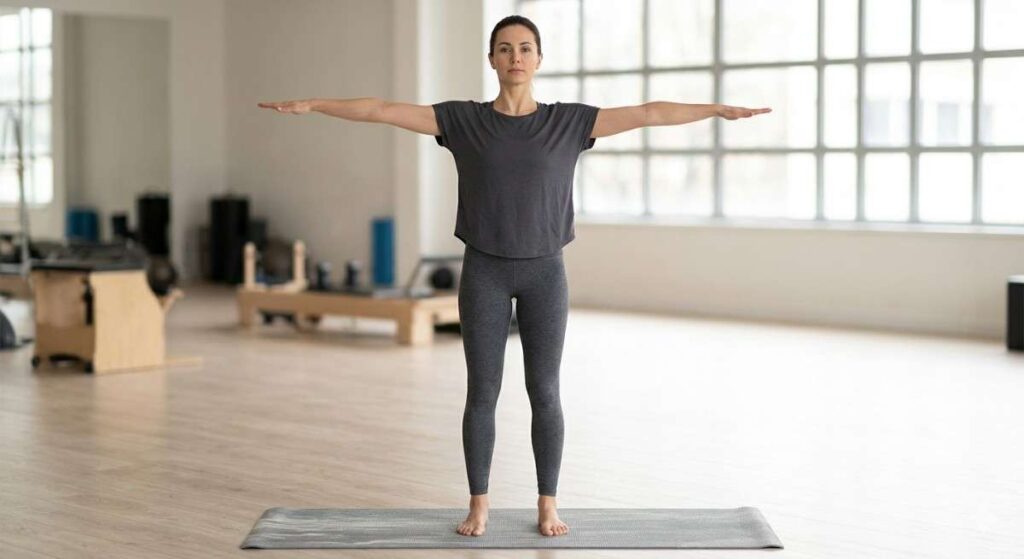
- Target: Anterior shoulders and core stability.
- Execution: Keeping your knees soft and your elbows slightly bent, raise one arm smoothly straight up in front of your body to shoulder height. Lower it with control, then alternate to the opposite arm. Take care to keep your spine neutral; do not arch your lower back to swing the weight.
Exercise 3: Curls

- Target: Biceps and upper arm toning.
- Execution: This highly effective arm-toning exercise can be performed either comfortably seated or standing. Keep your upper arms locked close to your torso, and curl the weights upward toward your shoulders, either simultaneously or alternating arm-to-arm.
Exercise 4: The Abdominal Crunch

- Target: Core strength and abdominal tone.
- Execution: Lie flat on your back with your knees bent and feet flat on the floor. Hold your weights resting near your chest or pointing upward. Engage your abdominal muscles to lift your upper shoulders off the floor, aiming the weights directly toward your knees. Keep your lower back completely supported on the floor; do not arch your spine.
Exercise 5: The Abdominal Crunch Through the Legs
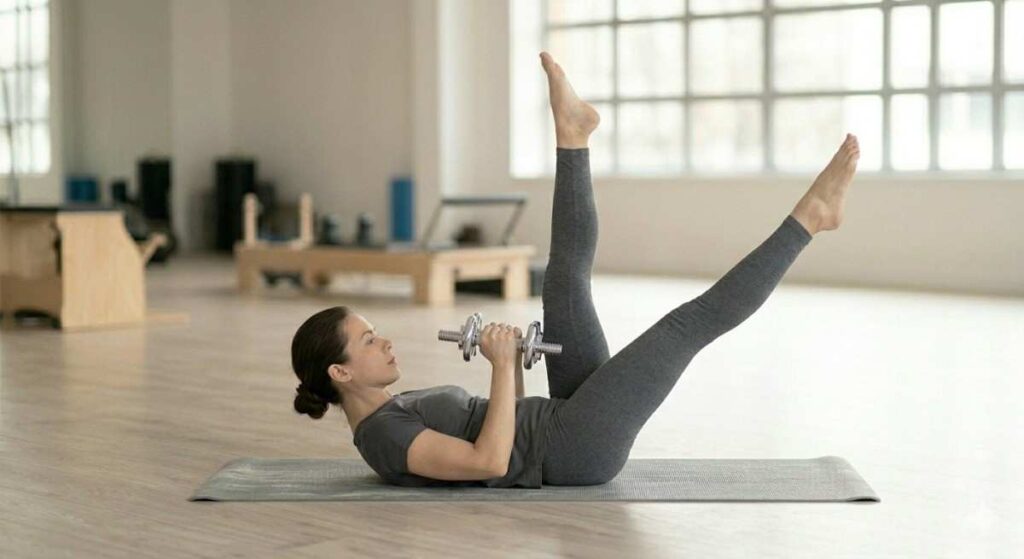
- Target: Deep lower abdominals and obliques.
- Execution: Lie flat on your back and raise your legs straight up into the air, keeping them open wide apart. Holding a weight securely with both hands, perform a steady abdominal crunch, passing the weight up through your open legs. Lower with control.
Exercise 6: The One-Arm Bent Row

- Target: Upper back, posture, and core stabilization.
- Execution: Drop onto your hands and knees on a comfortable mat. Support your body weight securely with one arm placed on the floor slightly in front of your shoulders. Using your free hand, pull the weight smoothly up toward your shoulder, keeping your elbow tucked close to your flank. Maintain a flat back; do not twist or arch your spine.
Shift Your Perspective: Being Fit is More Important Than Being Thin
While society remains intensely focused on dress sizes and the number on the scale, pioneering modern medical research reveals that a person’s level of cardiorespiratory fitness is an infinitely more accurate predictor of long-term health than their body weight.
Professor Stephen Blair of the world-renowned Dallas Laboratories has been leading a landmark longitudinal study tracking over 25,000 individuals of diverse ages, shapes, and sizes. Over years of rigorous monitoring, his research team uncovered a groundbreaking truth:
The Fitness-Health Connection: A higher percentage of mortality occurs among individuals who are physically unfit yet maintain a “normal” weight, compared to individuals who are clinically overweight but possess a high level of physical fitness.
Make Health Your Ultimate Goal

When you shift your daily mindset away from the exhausting cycle of endless dieting and reorient your focus toward achieving true physical fitness, your entire relationship with food and movement transforms.
On the path to building a fit, strong, and highly energized body, you will find that your system automatically sheds excess fat as a natural side effect. By making radiant health your daily goal, you escape the restrictive prison of fad diets, step into your natural physical vitality, and effortlessly achieve the correct, vibrant weight your body was always meant to maintain.







Leave a Reply